An ingrown toenail starts quietly. The edge or corner of the nail presses into the soft skin beside it, the spot gets tender in shoes, and within days it can be red, swollen, and sore enough to change how you walk. First-timers often make it worse with bathroom surgery, digging at the corner with clippers, which cuts the skin, leaves a sharper nail spike behind, and invites infection. This walkthrough covers what is actually happening, what a pedicure can and cannot do about it, and the point where the job belongs to a podiatrist instead.
At Nails #1 in Salisbury, pedicures include careful toenail shaping that helps prevent ingrowns. Prevention is squarely a salon's business. Treatment of an angry, infected corner is not, and a good salon will tell you so.
A first-timer's walkthrough, step by step
- Recognize the early stage: tenderness and slight redness where the nail edge meets the skin, usually on the big toe, with no heat or pus yet.
- Soothe, do not dig: soak the foot in warm water for ten to fifteen minutes, dry well, and wear shoes with room in the toe box while it settles.
- Leave the corner alone: do not cut a notch into the nail, lift the corner with tools, or trim the nail shorter to reach the sore spot. All three deepen the problem.
- Watch for escalation over 48 hours: spreading redness, warmth, swelling, pus, or pain that worsens instead of easing means home care has done its part.
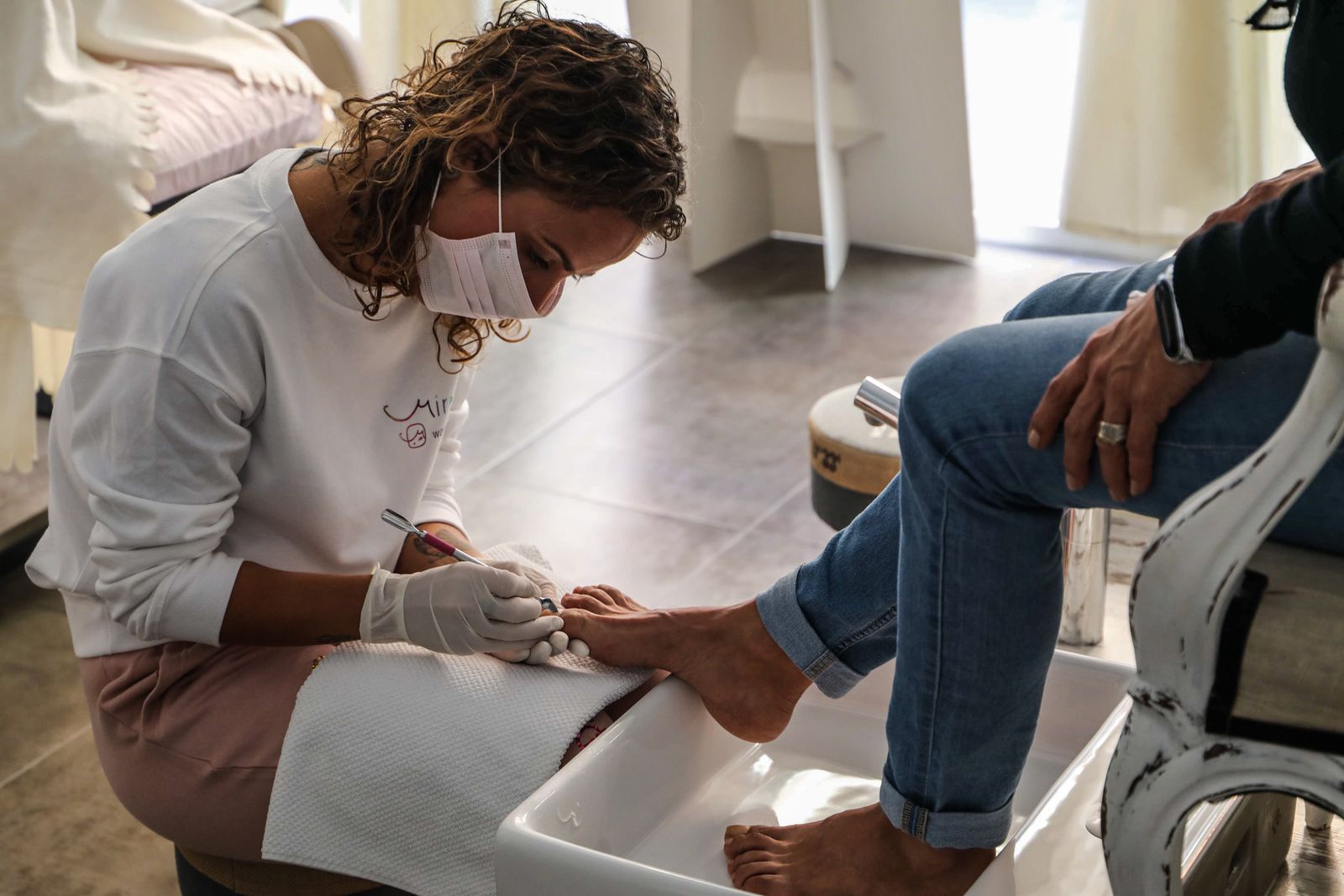
- At a pedicure, expect prevention only: soaking, gentle cleaning around the nail, and trimming straight across with the corner left intact and visible.
- If it is infected or you have diabetes or poor circulation, skip the pedicure step entirely and book a medical appointment first.
Prevention: the three real causes
Most ingrowns trace back to cutting, shoes, or shape. Cutting too short and rounding the corners down lets skin fold over the edge, and the growing nail then advances into it. The fix is boring and effective: trim straight across, keep the corners visible and just at the level of the skin, and file lightly. Shoes that taper tightly at the toe compress the nail folds all day; a toe box that lets toes lie flat removes constant pressure, which matters for Salisbury walkers, runners, and anyone on their feet at work. Shape plays a smaller role: thick, curved nails are more prone, and keeping them at a moderate length, not long, not stubby, lowers the odds.
The limits of salon care, stated plainly
A pedicure can soak, clean, moisturize, and shape. It cannot cut into living skin, remove an embedded corner, drain anything, or treat infection, and any salon offering to dig out an ingrown corner is offering something outside safe practice. Working on an infected toe also risks spreading that infection and delays the care that will actually fix it. Expect a reputable Salisbury salon to look at a hot, swollen toe, decline to work on it, and point you to a podiatrist or urgent care. That refusal is professionalism, not unhelpfulness, and it protects the next client as well as you.

When it is a podiatrist's job
Book medical care if you see pus, red streaks moving up the toe, or swelling that makes shoes painful; if home soaking brings no improvement in two to three days; if ingrowns keep returning on the same toe, since a clinician can address a section of the nail root; or immediately, without a waiting period, if you have diabetes, circulation problems, or a weakened immune system, because foot infections escalate faster in those cases. A podiatrist can lift or trim the edge safely, treat infection, and, for repeat cases, offer a lasting fix that no pedicure can honestly promise.
A habit worth starting this week
Prevention sounds abstract until it is attached to a routine. Pick one day a week, after a shower when nails are softer, to look at your big toes for ten seconds each: edge visible, corner not buried, skin calm. Trim only when length actually needs it, and trim then, while you are thinking about shape, rather than in a hurry before shoes go on. That small Salisbury routine catches most ingrowns at the tender stage, when roomier shoes and a few soaks still settle them, instead of at the swollen stage where the calendar fills with appointments you never wanted.
Common questions
Can a pedicure fix my ingrown toenail?
A pedicure can help prevent ingrowns with straight-across trimming and gentle care of a mild, non-infected nail. An embedded, swollen, or infected corner needs a podiatrist, not digging at a salon.
Should I cut a V notch in the nail to relieve pressure?
No. The notch does not change how the sides grow, and the cutting often leaves sharper edges and broken skin. Warm soaks, roomy shoes, and leaving the corner intact are safer first steps.
How should I trim toenails to prevent ingrowns?
Trim straight across, keep length about even with the tip of the toe, and never round corners down into the skin. Light filing to remove a snag is fine; shortening the corner is the risky move.
Photos in this guide are representative stock images.
← All guides from Nails #1← Back to Nails #1